What you see
He stopped jumping onto the windowsill
What it may mean: sore joints. Cats with arthritis rarely limp. In one study arthritis was found in 82% of cats over 14, yet limping was noticed in only 13 out of 100.
Cats hide pain better than any other pet. This illustrated guide, built on veterinary research, walks you through 34 everyday situations: why your cat does it, when it's time to see a vet, and what you can do at home today.
One-time payment.
63 illustrated pages, instant PDF download.
Secure checkout by Hotmart7-day money-back guarantee

"A cat with sore joints still eats and purrs. He just stops jumping onto the windowsill."— Dr. Kim
Most problems owners bring to the vet began weeks or months earlier. The cat was sending signals; no one knew how to read them. A few examples from the book:
What it may mean: sore joints. Cats with arthritis rarely limp. In one study arthritis was found in 82% of cats over 14, yet limping was noticed in only 13 out of 100.
What it may mean: in cats over 8, a sudden rise in attention-seeking can be an early sign of hyperthyroidism or cognitive changes.
What it may mean: cats also purr when stressed, in pain or seriously ill, probably to calm themselves. A purr isn't proof that all is well.
What it may mean: stepping over the rim hurts, or an aversion to the box has already formed. Punishing him only teaches him to hide.
What it may mean: possible kidney disease, diabetes or hyperthyroidism. Clump size is a free daily check you already have.
What it may mean: chronic stress and illness rarely look dramatic in cats. More often it's a slow fade of his usual behavior.
From the book's "When to see the vet" sections. This list is not complete: if something feels wrong, call your vet.
Every chapter ends with a myth and the fact behind it. Tap a card to flip it.
Each of the 34 situations follows the same short, clear path, so you can find your answer in a couple of minutes.
Walking across the bed, pawing at you, knocking things over, meowing. Most often, he expects you to get up and feed him.
From the night shift to the litter box, from the tail to the teeth. Here is the full list.
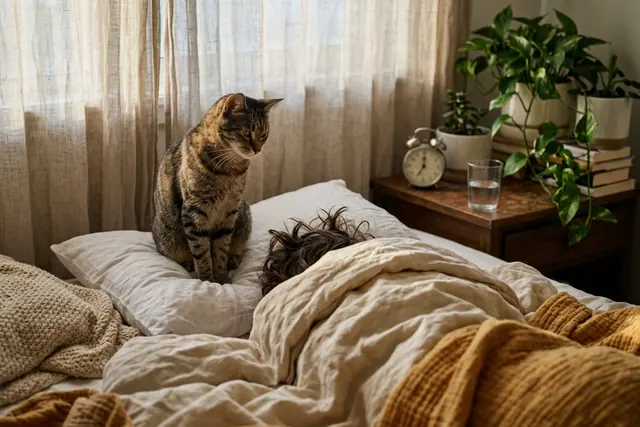 Part 1
4 situations
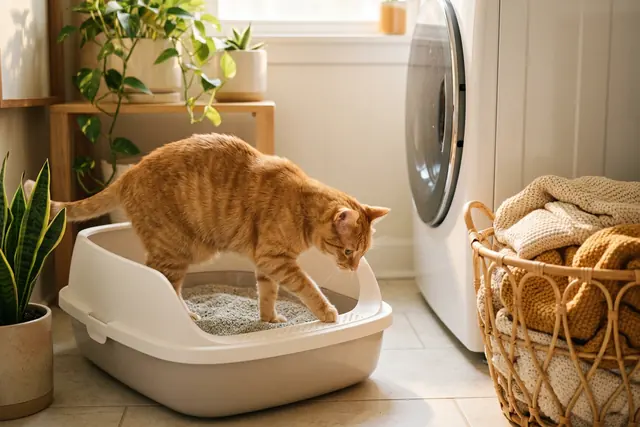 Part 2
4 situations
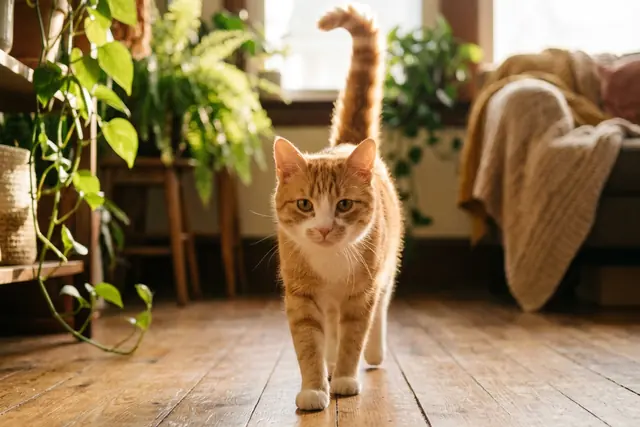 Part 3
12 situations
 Part 4
4 situations
 Part 5
6 situations
 Part 6
4 situations
Plus a starting chapter: when to see a veterinarian today, and red-flag lists in almost every situation.
Heart disease often causes no visible symptoms early on. Hypertrophic cardiomyopathy affects roughly one cat in seven, and a gradual rise in sleeping breathing rate can be its first measurable sign.
At the clinic a cat is tense, so the most accurate number is the one you count at home while he's in deep sleep. Count the rises of his chest for 30 seconds, then double it.
Record it weekly: the trend matters more than any single number.

Wait until your cat is in deep sleep, not purring or just dozing off. Press start, then tap once for each rise of the chest. You can also press the space bar.
Nothing is saved or sent anywhere; the counter runs only in your browser. It's a home habit from the book, not a diagnosis.
Short sections, plain words, warm illustrations. Tap any page to read it up close.
Swipe or use the arrows · 12 sample pages
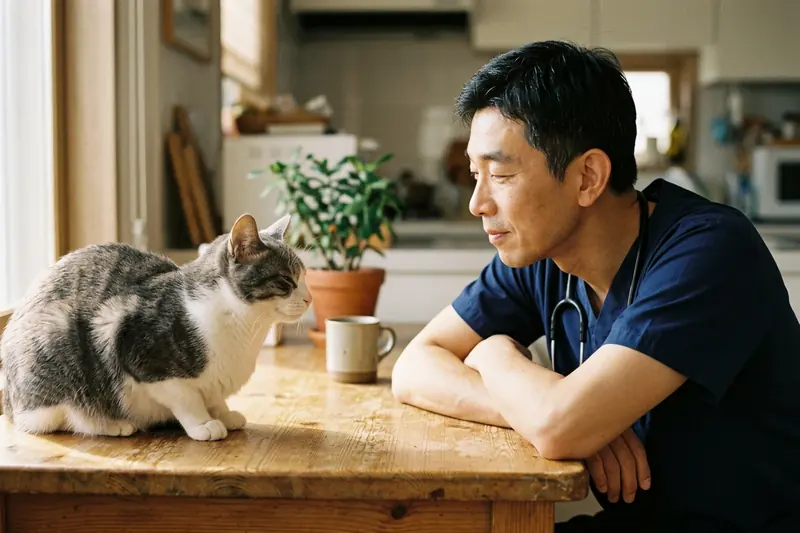
"An older cat suddenly becomes more affectionate, and the owner is delighted, even though this very change is sometimes the first sign of illness."
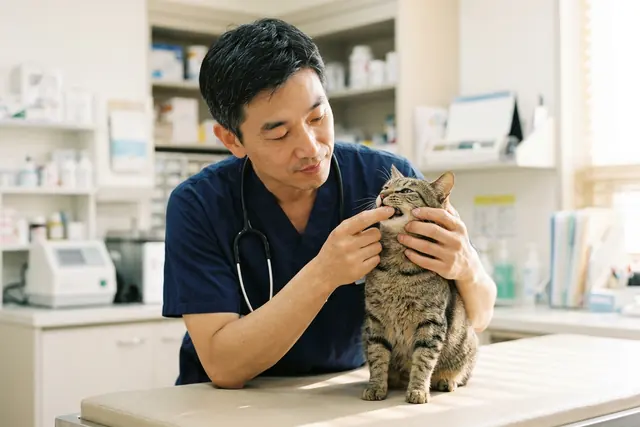
Dr. Kim, the book's veterinarian character, walks you through the book, one familiar situation at a time. No jargon and no scolding: just what your cat is telling you, when it matters, and the simplest thing that helps.
Please note: Dr. Jin-ho Kim is an AI-created character, not a real person, and his photos on this site are AI-generated. The advice in the book is drawn from published veterinary research and guidelines, named at the end of each chapter.

"Come along! I'll show you what your cat has been trying to tell you."
— Dr. Kim, page 2
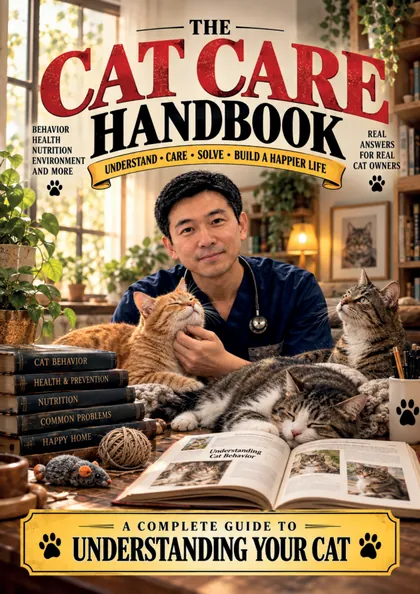
A complete guide to understanding your cat.
One-time payment.
No subscription.
Secure payment by Hotmart. By purchasing you agree to our Terms and Refund Policy.
Read it, try a few tips with your cat. If the book isn't right for you, request a full refund within 7 days of purchase. Hotmart handles it.
A 63-page illustrated e-book in PDF format, The Cat Care Handbook: A Complete Guide to Understanding Your Cat. After payment, Hotmart emails you a download link.
That's the product name in our Hotmart store. It's the same book.
No. The book helps you understand your cat, fix everyday problems at home and recognize when it's time to see a vet. It is not a diagnosis or treatment plan for your cat. When in doubt, call your veterinarian.
Yes. Cats hide illness well, so a lot of the book is about catching changes early: a simple home health log, how to weigh your cat, the sleeping breathing check, teeth, and the small behavior changes that are worth a checkup.
Both, and everything in between. Many situations have notes for specific ages, with extra attention to cats over 10, when joint pain, thyroid and kidney problems become more common.
Yes. It opens on any phone, tablet or computer.
No. You pay $30 once and the book is yours.
Request a refund within 7 days of purchase through Hotmart and you'll get your money back in full.
No. Dr. Jin-ho Kim is an AI-created character who guides you through the book, and his photos are AI-generated. The facts and recommendations come from published veterinary studies and guidelines, which the book names in every chapter.
No. There are no cookies, analytics, trackers, ads or forms here, and fonts and images load from this site, not from Google or anyone else. Your details go only to Hotmart, and only when you decide to buy.
Write to dubbingforyt@gmail.com. For payment and download questions, Hotmart support can also help.